
Women Make Waves International Film Festival
單元專文
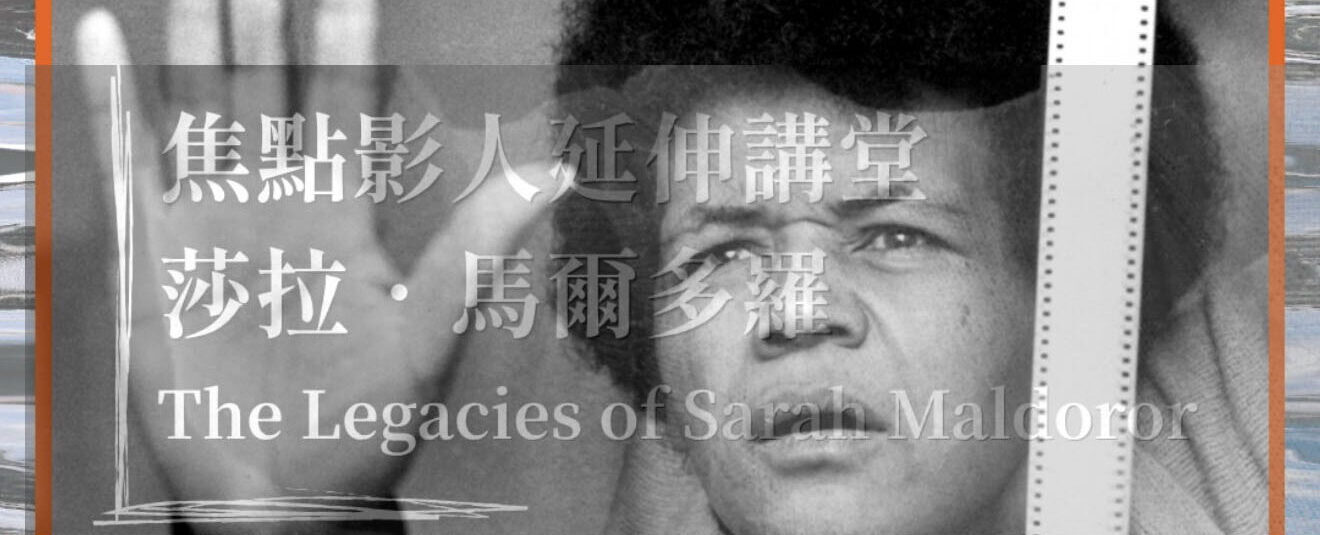
A Ubiquitous Combat Stance: Sarah Maldoror’s Anti-Colonial Praxis
Written by Su Ui-Tiok
Translated by Liu Sih-Yu
“African women must be everywhere. They must be in the images, behind the camera, in the editing room, and involved in every stage of filmmaking.” —Sarah Maldoror
The name itself is an act of resistance. When Sarah Ducados arrived in Paris in the 1950s, she chose the name Maldoror, taken from Comte de Lautréamont’s prose poem Le Chant de Maldoror. “Maldoror” is not only a symbol of rebellion, but also a declaration of how she intended to live. Since then, a Gers native who has linked to Guadeloupe through her father, using the rebellious name Maldoror to give voice to the collective struggles, memories, and diaspora communities of African people.
In Paris, Maldoror met local intellectuals and her future life partner—a poet, MPLA’s founder and its first president—Mário Pinto de Andrade. These encounters, together with their discussions and movements of colonialism, Négritude and oppressed histories, nurtured her and became the core theme of her films. Furthermore, she remained committed to the idea of anti-colonialism for her entire life and was always ready to fight. Throughout her filmmaking career, she made more than forty films, including feature and short films, dramas, documentaries, experimental films, portrait films, and television dramas. This year, WMWIFF selected works that can represent four facets of Maldoror’s career, offering the audience an introduction to her works.
Rebellion Cinema: Film as a Weapon and a Path to Liberation
In the 1960s, with a scholarship from the Soviet Union, Maldoror finished her studies at VGIK. After that, she and her husband moved to Algiers along with their two children. After Algeria gained independence from France in 1962, this country became the anti-imperialist “capital” of the African world. Maldoror began her filmmaking career there.
Adapted from Angola independence activist and writer José Luandino Vieira’s short story Le Complet de Mateus, her first short film Monangambééé discussed the incomprehension and torture that Portuguese colonizers had against colonized people. The film was set in a closed prison, and the music that Maldoror used was from the avant-garde jazz group Art Ensemble of Chicago, allowing the spirit of the fighters to transcend control from colonizers.
Maldoror’s widely acclaimed classic Sambizanga was also adapted from Vieira’s novel. The story continues to depict the torture that revolutionists had endured and how they were in captivity. However, this time, she shifted the camera’s focus onto the women. By following the protagonist Maria as she carries her baby through the wilderness in search of her husband, the film was not merely a celebration of men’s heroism; instead, it locates the momentum of revolution in women’s everyday struggles.
Négritude: the Poetic Portrait of Black Pride
Maldoror was not solely focused on revolutionary struggles; she was fully aware that the decolonization of culture and way of thinking also mattered. Between the 1970s and 1990s, she made a series of documentaries to pay tribute to great thinkers of Négritude.
In Aimé Césaire: The Mask of Words, Maldoror documented the thoughts of this Martinique poet and politician, showing how she used poetry to reshape Black cultural agency; And the Dogs Were Silent was filmed in the Parisian museum Musée de l’Homme, the title of the film is directly adapted from Césaire’s theatre work, using extremely experimental visual language to evoke the struggle and awakening of anti-colonial resistance. As for Léon G. Damas, she turned the camera to another iconic figure of the Négritude movement. Interviews and landscape intertwined briskly, highlighting the sharp yet highly rhythmic elements of Damas’s poems.
Even when filming spaces that might appear unrelated to politics, Maldoror’s lens was full of concern and care. In this five-minute film, Père Lachaise Cemetery took the audience through Paris’ famous cemetery, exploring the intersections of memory, death and art among the cemetery’s tombstones and historical monuments.
Carnival Trilogy: Cultural Declarations in Festival Tradition
At the end of the 1970s, Maldoror visited Guinea-Bissau and Cape Verde, which had only recently gained independence from Portuguese colonial rule. She made three short films: Fogo, Island of Fire recounted the history of the Cape Verde Islands’ colonization and liberation through narration, whereas Carnival in Bissau and Carnival in the Sahel focused on people’s bodies, postures, movements and how they expressed cultural agency. From the parade of Labor Day, equestrian competitions to traditional festivals, Maldoror looked back at histories illustrating how West African people culturally made statements through festivals; furthermore, the projects also highlighted people’s free will after decolonization. Under Maldoror’s lens, the grand narratives of war films had become poetic traces in everyday life. The collective celebrations and ceremonies gave traditional festivals political meanings, allowing people to reclaim their bodily autonomy. They gathered a sense of belonging and sustained culture domain for the continuation of resistance.
Humorous Strategies for Deconstructing Racial Prejudice
Maldoror’s later work also extended into mass media: television. She adopted a light-hearted and ironic comedic approach to fight against racial discrimination that was deeply ingrained in French society. A Dessert for Constance was the most representative work in this phase. The story was about two African immigrant sweepers who lived in France and wanted to collect money for their sick comrades. Using a cookbook they happened to find, they memorized recipes of French cuisine and participated in a TV cooking competition to raise money for their comrades’ medical expenses. Maldoror shook hierarchical bias and racial prejudice in a humorous way through French cuisine, a symbolic cultural representation.
In Scala Milan A.C., she turned the spotlight on children of immigrants in the suburbs of France. She unveiled the problem of social integration, passing down cultural heritage among immigrant communities. Finally, by depicting teenagers’ creativity and the occupation of public spaces, those teenagers reclaimed their cultural identities.
Conclusion
As Anne-Laure Folly captured in the documentary Sarah Maldoror ou la nostalgie de l’utopie, Maldoror had always been in the front line of anti-colonialism, feminism and black consciousness. The reason why she devoted herself to filming the independent movements across Africa was that she realized the world only paid attention to the Vietnam War but ignored African countries that were resisting colonial rule. Therefore, her films sought to reveal, exhibit and glorify resistance movements in Africa and decolonial paths toward rebuilding collective self-worth. In these works, rebellion and resistance were never only about individual heroism; rather, they were the collective experience, collective connection and collective liberation. Her lens focused on the view of how people breathe and fight together and how they reconstruct dignity. Just as her good friend Césaire once wrote, Maldoror’s works always remind us: “…who, camera in hand, fights oppression, alienation and defies human bullshit. We will be ever watchful of clouds, that’s a promise!”